New Rum Review: Siesta Key Toasted Coconut
Greetings, friends!
Today I’m back with a review of a unique flavored rum out of Sarasota, Florida: Siesta Key Toasted Coconut Rum. This rum is flavored simply by steeping shredded toasted coconut in rum that was made in their pot still. The resulting spirit is bursting with coconut flavor, but tastes nothing like any other coconut rum we’ve reviewed. Read the full review here and you’ll see what I mean.
Cheers,
Josh

DIY Pineapple Rum
Hey folks,
While I am still woefully behind on rum reviews, I wanted to take a moment to share something I have been having a lot of fun with lately: pineapple rum. If you follow me on social media (Twitter, Instagram, Facebook) then you may have noticed me making this a few times already. I was originally inspired to make the infusion after tasting Plantation Rum’s Stiggin’s Fancy, and because that product is not readily available, I thought I’d document my process for you. Check out the recipe here and let me know what you think.
Cheers,
Josh

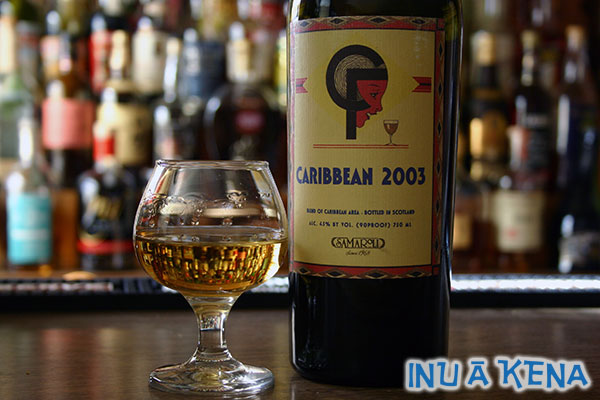
New Rum Review: Samaroli Caribbean 2003
Greetings, folks!
I trust you all had a wonderful holiday. Given my slow pace of posts during the holiday season, I figured I should begin the new year with a review of a special rum. This time it’s the Samaroli Caribbean 2003–a fine example of pure Caribbean rum by way of Scotland. Read the review here.
Cheers,
Josh
New Rum Review: Dos Maderas 5+3
Greetings!
Today I’m back with another rum that’s finished in Sherry casks: the Dos Maderas 5+3. These are the folks that import Caribbean rum and age it again in Jerez, Spain. As you may recall, I wasn’t a big fan of the 5+5 (too much Sherry, not enough rum) so perhaps a little less time in the Sherry cask will be more suitable. Find out by reading the review here.
Cheers,
Josh

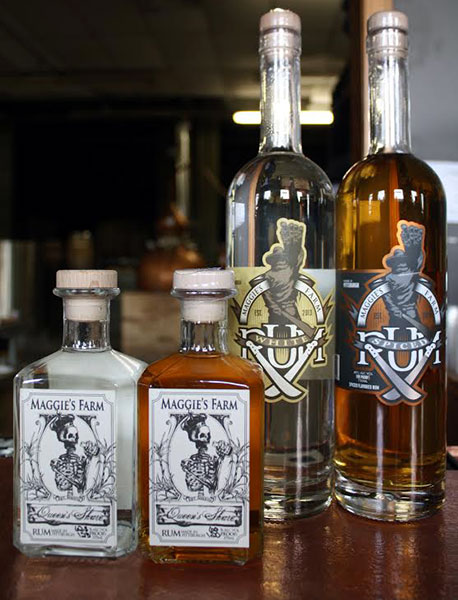
New Rum Review: Maggie’s Farm
Hey there folks,
I’m back today with tasting notes on four rums from a new craft rum brand made in Pittsburgh called Maggie’s Farm. These are all made from turbinado sugar, and are surprisingly tasty. Take a look here and read about them, won’t you?
Cheers,
Josh
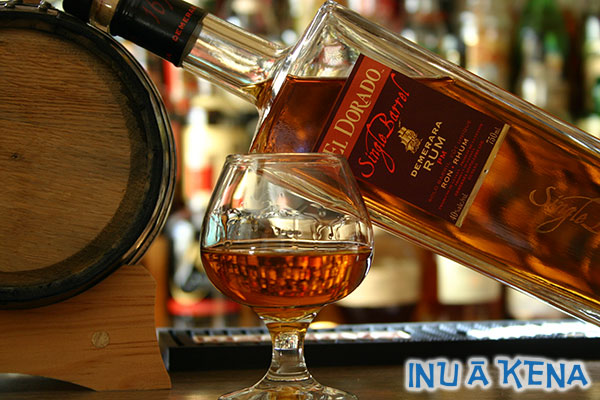
New Rum Review: El Dorado Single Barrel Port Mourant
Greetings, folks!
Today I’m back with another review of an interesting rum from Demerara Distillers Limited (DDL) in Guyana. Whereas DDL usually blends rums from their various stills to produce their signature style, this rum is the distillate from just one of those stills: the wooden Port Mourant pot still. I’m excited to taste the a rum that makes up a significant portion of their 15-year rum, so let’s get to it. Read the review here.
Cheers,
Josh
Sorry, You’re Not Allowed to Hate Rum

People often say they don’t like rum, which I find colossally stupid.
If you say you don’t like vodka, that’s one thing—some are far better than others of course, but they all have the same basic flavor profile. Not so with rum, and that’s why it’s dumb to say you don’t like it. You may dislike a particular rum, but the fact is, there’s a rum for every palate.
Whenever I get into a discussion about the merits of rum, you’ll hear me say “rum is the most diverse spirit category on the planet”. I say that because it’s true. And it’s true because rum is made all over the world in a variety of different styles from a variety of different ingredients. It simply doesn’t lend itself to homogeneity.
For starters, the only real requirement for rum to be rum is that it be made from a sugar cane derivative. That means you can have rum made from sugar cane juice, sugar cane syrup, crystalline sugar or a variety of different molasses grades. Oh, and let’s not forget that there are a ton of different sugar cane varieties whose flavors and sugar contents vary widely, differentiating the final product even further.
So with all of those potential ingredients, we now add in a few more key variables. Number one? Yeast. The humble microorganism is what turns that sugar into booze, so it’s probably pretty important, right? You bet it is. The type of yeast and length of fermentation is about as critical as the kind of sugar you choose.
At the extreme ends of the yeast scale, you have 1) Bacardi, who uses their proprietary yeast strain to ferment a high-alcohol brew as quickly as possible, and 2) Appleton, who uses a slow-acting yeast strain and some other goodies from the dunder pit to ferment to a lower alcohol level over a week or two. If you’ve ever made beer, you know that yeast choice has a monumentally huge impact on the taste of your brew, right? Well, the same goes for fermented sugar juice.
So now that we have our fermented sugar juice, it’s all the same from here, which is probably why you hate all rum, right? Nope.
Next up is distillation, and here we have another ton of variables that can lead to wildly different products. For example you could A) use a column still in continuous mode and make high proof, light tasting rum or B) use a pot still in batch mode to make a lower proof, highly flavorful rum. Of course, rum makers often use a blend of the two (and many other methods not mentioned here) to create their own signature style.
So now that we’ve gone through the still, we have a distillate that is crystal clear, and has a unique flavor profile (that you will undoubtedly hate) resulting from the chosen sugar type, the yeast, and the distillation method. Now what?
Many rums are filtered at this stage to smooth out the edges. Some are bottled and sold at this point without any aging. Others are laid down in a barrel to age, and then filtered again to remove the color added from the oak barrel. Others spend many years in the barrel before being bottled, with the tropical heat speeding the aging process along. But time isn’t the only factor in aging. The type of barrel makes a huge impact, and here again we have more variables.
Beyond American and French oak, we have still more choices relating to a barrel’s provenance. Most rums are in fact aged in used Bourbon barrels (that whole thing about 2 years in new American oak makes for a lot of barrels) while others are aged in ex-Cognac casks or Sherry butts, or a combination of the three. The barrel-finishing has a huge impact on a rum’s taste, but you wouldn’t care about that because you hate rum.
Finally, we come to blending and bottling, where the blender expertly combines different barrels that complement each other and aligns with their vision for the product that you will of course, hate. Or will you?
If you’ve read this far, you should be convinced at the very least, that there are many different ways to make rum, and that those different production methods yield substantially different flavor profiles. And following that logic, we can safely assume that there is a style that will suit your discerning taste buds, n’est ce pas?
Now that you’re ready to explore the magical world of rum, here are a few recommendations based on other spirits you may already enjoy.
For the Bourbon drinker:
For the Scotch drinker:
For the Tequila drinker:
St. George California Agricole
For the vodka drinker:
Do you have a favorite rum you use to convert professed rum haters? If so, please share it with us below.
Cheers,
Josh
New Rum Review: Berry Bros. Guadeloupe 12-Year
Greetings!
Reviews have been happening a bit slower again due to an illness in the family, but it’s times like these that I remember the healing qualities of our favorite and most noble spirit.
Today you’re in for a real treat as we dive into a rum from Guadeloupe selected by the venerable London merchants Berry Brothers and Rudd. This twelve year-old French style rum is equally smooth and challenging, and provides a fantastic sipping experience that just might make you re-evaluate what you like in a rum. Read the review here and see what I’m getting on about.
Cheers,
Josh

New Rum Review: English Harbour Reserve 10-Year
Hey there rummies,
After a brief break to talk about bitter liqueurs, I’m back with another premium rum review. This time it’s the English Harbour 10-year from Antigua. At $90/750ml this is a pretty spendy rum, but is it worth it? Read my review and find out!
Aloha,
Josh

New Article: Amaro 104, Continuing Education
Hey folks!
Today I’m proud to share with you the latest in my series on bitter liqueurs or amari. Amaro 104 includes another nine, which takes the total number of amari evaluated here to thirty-three! These nine include the Vittone line which is new to the States, as well as an amaro made in Oregon and several others from Italy. So if bitter is you thing (heck, even if it’s not) click here and learn all about them!
Cin Cin!
Josh

 Inu A Kena